Canary deploys that roll back themselves
On this page
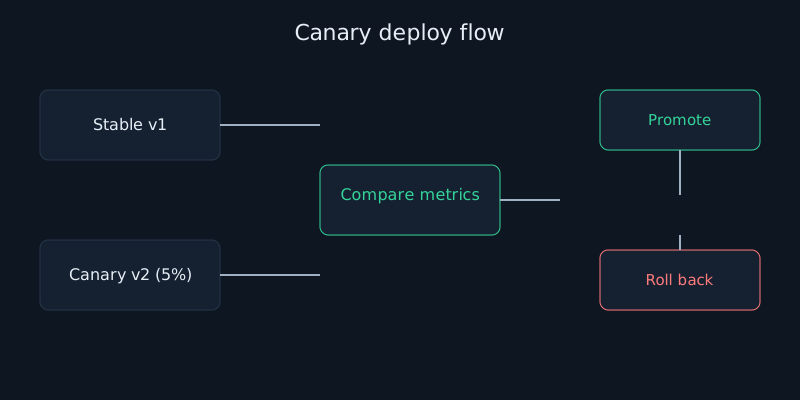
Every deploy used to mean someone watching a dashboard for twenty minutes, ready to run kubectl rollout undo by hand. The fix wasn’t a bigger dashboard — it was making the rollback decision
automatic.
The check
The canary gets a fixed slice of traffic. After a warm-up window, a small job compares its error rate and p99 latency against the stable version’s baseline:
function shouldPromote(canary: Metrics, baseline: Metrics): boolean {
  const errorBudgetOk = canary.errorRate <= baseline.errorRate * 1.5;
  const latencyBudgetOk = canary.p99Ms <= baseline.p99Ms * 1.2;
  return errorBudgetOk && latencyBudgetOk;
}
If shouldPromote returns false, the pipeline rolls the canary back and posts the metrics that
tripped it to Slack — no one has to decide anything at 6am.
What changed
Deploys stopped being an event. The team ships smaller changes more often, because a bad one costs five minutes of canary traffic instead of an incident.